

Creative
How to Start a Podcast: A Step-by-Step Guide
- Published
- 17 June 2026
- Reading time
- 6 min read
- By
- Mateo Jakelic
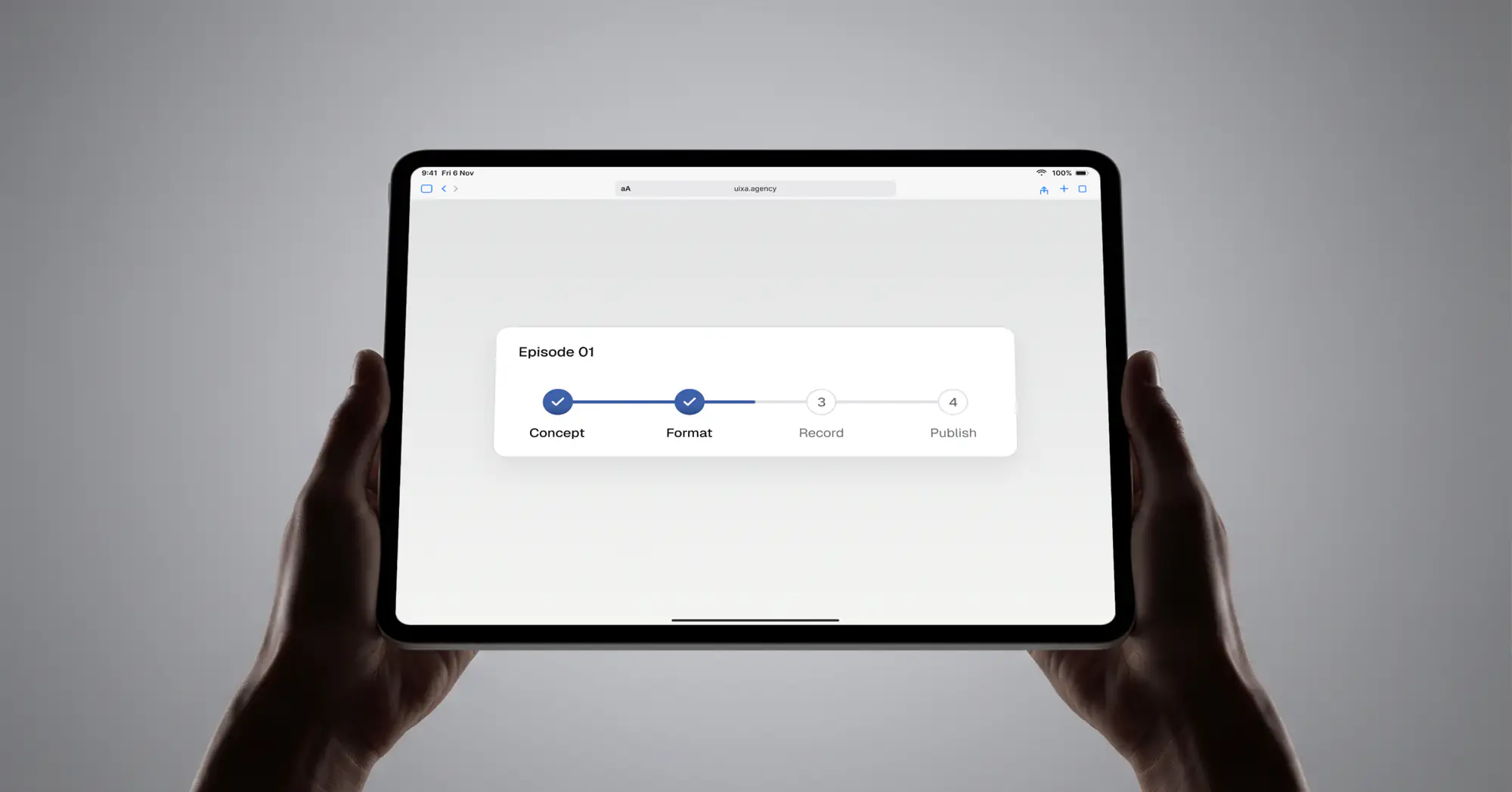
Starting a podcast comes down to a clear concept, a consistent format, good-enough audio, careful editing, and steady promotion. The publishing part is easy; quality and consistency are what build an audience. Many people start solo to test the idea, then move to professional production once they're serious.
A Step-by-Step Guide
Starting a podcast is easier than it's ever been, and harder to do well than most people expect. The barrier to publishing is almost zero; the barrier to making something people actually keep listening to is real. This guide walks through the whole process, from idea to your first published episode, so you start with a foundation you won't have to rebuild later.
1. Define your concept
Before any equipment, get clear on three things: who your podcast is for, what it's about, and why someone would listen to you specifically. The most common reason podcasts fade out isn't bad audio, it's a fuzzy concept that runs out of steam after a few episodes. Narrow is better than broad. "Marketing for Austrian small businesses" will find its audience faster than "business and life in general."
Decide your format too: solo, co-hosted, or interview-based. Interviews are easier to sustain because your guests bring the content; solo shows demand more from you each episode but build your personal authority fastest.
2. Plan your format and structure
Consistency is what turns listeners into subscribers, so decide the repeatable shape of your show early: rough episode length, how often you'll publish, and a simple structure (intro, main content, outro). Be realistic about frequency. A monthly episode you actually deliver beats a weekly one you abandon after a month. Batching, recording several episodes in one session, is the single best habit for staying consistent without burning out.
3. Get the right equipment
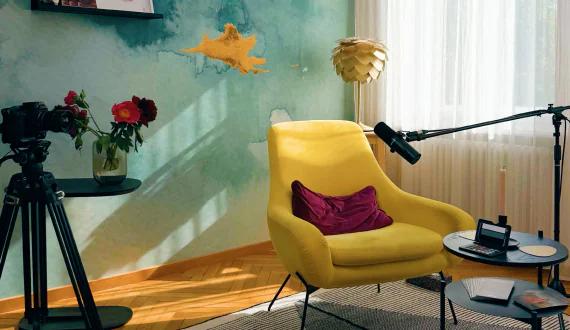
You don't need a fortune in gear, but audio quality is the one thing listeners won't forgive, so this is where to focus. At a minimum you'll want:
- A decent microphone (a USB mic is fine to start; XLR mics with an interface offer more room to grow)
- Headphones, so you can hear problems while recording
- A quiet, soft-furnished room, soft surfaces tame echo, which is the most common amateur-audio giveaway
- Recording software to capture it all
The room matters more than people think. A mid-range mic in a treated, quiet space beats an expensive mic in an echoey one every time. If you'd rather skip the learning curve entirely, this is exactly where a production partner with a proper studio setup earns its place.
4. Record your episode
For recording, you have three broad options: in a studio for the best controlled quality, at home or on location with your own setup, or remotely if your guests are elsewhere. Whatever you choose, record each participant on their own track if you can, it makes editing far easier. And always record a minute of silence in the room; it gives your editor a clean "room tone" to patch gaps with later.
A practical tip that saves reshoots: shooting or recording more than you think you need is almost always worth it. It's easier to cut down than to wish you had more.
5. Edit and polish
Editing is where a recording becomes an episode. At a minimum: trim the dead air and false starts, remove distracting noises, balance the levels so nobody is too loud or too quiet, and add an intro and outro. Much of good editing is about removing rather than adding, tightening the pacing so the episode respects the listener's time.
This is also the most time-consuming part, and the step most people underestimate. Expect editing to take several times the length of the episode itself when you're starting out. It's one of the most common reasons creators hand production over to a partner.
6. Publish and distribute
To get your podcast onto Spotify, Apple Podcasts, and the rest, you publish it through a podcast host, a service that stores your audio and generates an RSS feed. You submit that feed once to each platform, and from then on new episodes appear automatically. Choose a host, write a clear show description and episode titles (this is where a little SEO thinking helps people discover you), and you're live.
7. Promote your show
Publishing isn't the finish line. The shows that grow are the ones that turn each episode into more: short audiograms and video clips for social media, quotes, and show notes. Video podcasts (vodcasts) make this even easier, since one session produces both audio and video clips for YouTube and social. Promotion is ongoing work, but it's what separates a podcast a few friends hear from one that actually builds an audience.
Should you produce it yourself or hire help?
Doing it yourself is a perfectly good way to test whether podcasting is for you, and you'll learn a lot. But once you're committed, especially if it's a business podcast where quality reflects on your brand, the time cost of recording and editing every episode adds up fast. Many people start solo and move to professional production once the show proves itself, freeing them to focus on the content while someone else handles the technical craft. If you're weighing that up, our breakdown of what podcast production costs and our guide to podcast production in Austria lay out what's involved.
Frequently asked questions
How do I start a podcast for free?
You can start with a phone or computer mic, free recording and editing software, and a free tier on a podcast host. The audio won't be professional, but it's enough to test your concept before investing in equipment or production.
What equipment do I need to start a podcast?
At minimum, a decent microphone, headphones, a quiet room, and recording software. A USB mic is fine to begin with; you can upgrade as your show grows.
How long should a podcast episode be?
There's no fixed rule, episodes range from 15 minutes to over an hour. What matters is consistency and respecting your listeners' time. Make it as long as it needs to be and no longer.
How do I get my podcast on Spotify and Apple Podcasts?
Publish through a podcast host, which generates an RSS feed. You submit that feed once to each platform, and new episodes then appear automatically.
Is it hard to edit a podcast?
The basics (trimming, balancing levels, adding intros) are learnable, but doing it well takes time and practice, often several times the episode length per episode. It's the step most people find hardest to sustain.
The bottom line
Starting a podcast comes down to a clear concept, a consistent format, good-enough audio, careful editing, and steady promotion. The publishing part is easy; the quality and consistency are what build an audience. Plenty of people start solo to test the idea, and move to professional production once they're serious, so they can focus on what they want to say rather than the technical work behind it.
Ready to start a podcast, or want yours to sound professional from episode one? Get in touch and we'll help you launch it properly.