




Development
The small things that make or break your online shop
- Published
- 13 November 2026
- Reading time
- 4 min read
- By
- Markus Pichorner
Most online shops don't lose customers to a bad design. They lose them in small moments: a sold-out product with no next step, a shipping cost that only shows up at checkout, a form that wants an account before it takes your money.
About 7 in 10 online carts are abandoned before purchase, according to Baymard Institute's average of 50 studies. Part of that is people just browsing. A large part comes from details a shop can fix.
Sold out shouldn't mean goodbye
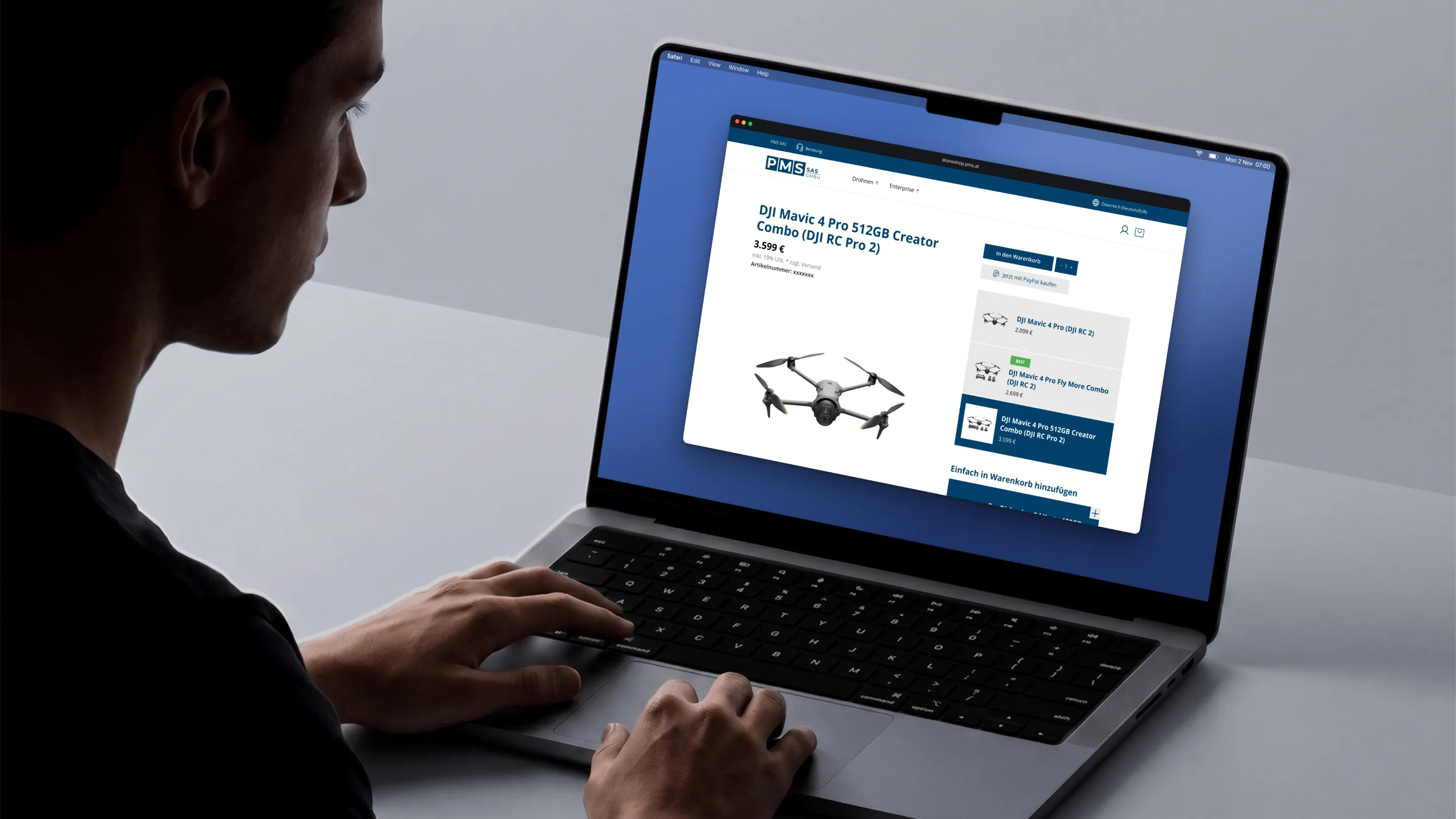
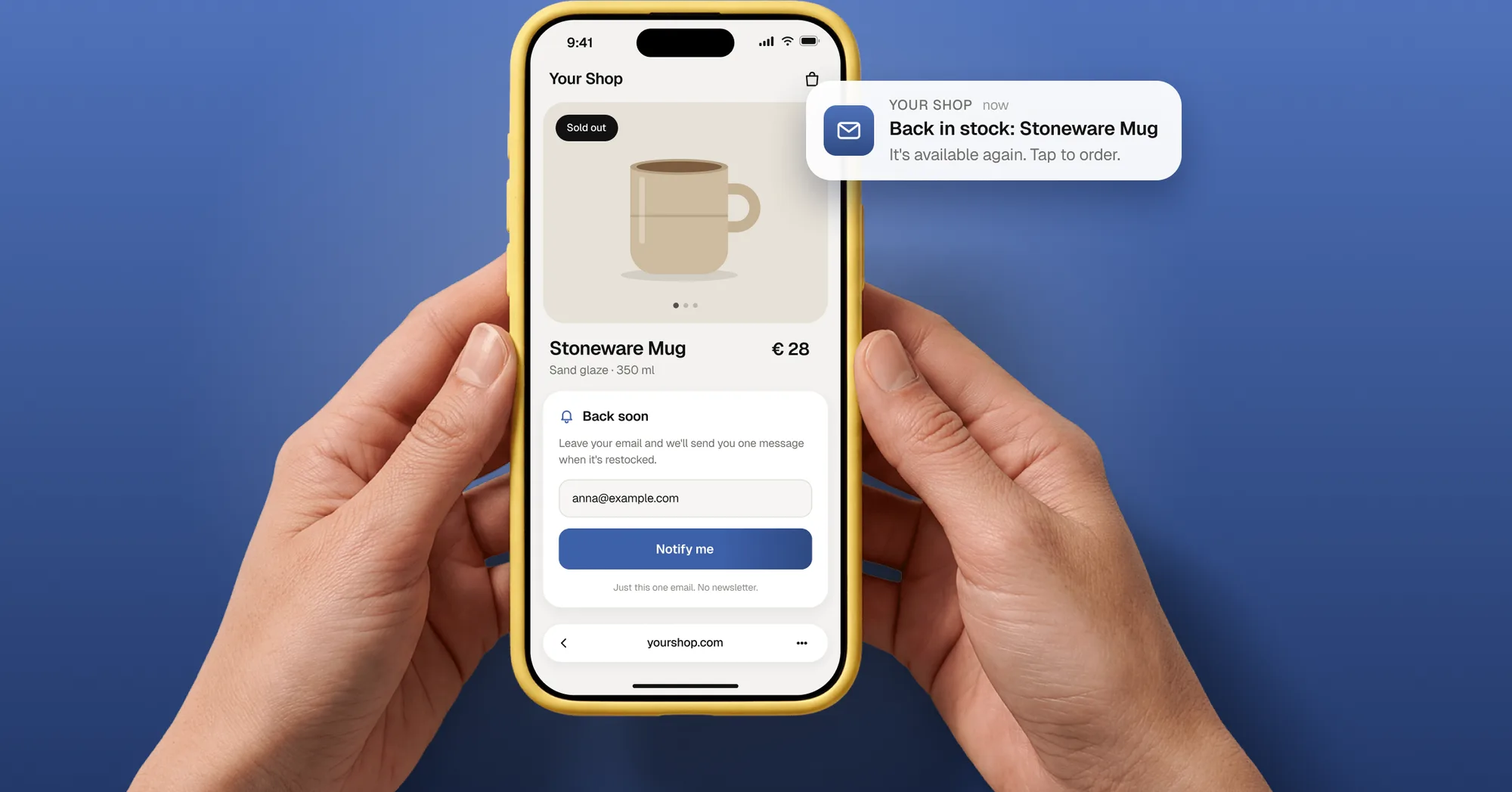
On most shops, a sold-out product is a dead end: a grey button, and the visitor leaves. The alternative is simple. Let people leave their email address, and send them one message when the product is back. Once it is set up, the shop sends that email on its own.
The numbers behind it are hard to ignore. In Omnisend's 2025 data from more than 27,000 brands, back-in-stock emails converted at 6.72%, the highest of any automated email type. Regular campaign emails converted at 0.08%. Yet only 0.6% of brands in that dataset used this automation at all.
It works because the person asked for exactly this email. They already wanted the product; the email just tells them when they can have it. And as a side effect, the sign-ups per product show you where demand is before you reorder.
One thing to get right: the form should promise only the restock email. Newsletter consent under GDPR has to be a separate, free choice, not bundled into another service, and Litmus points out that someone who signs up for a back-in-stock alert expects nothing more once it arrives. Make sure your privacy policy covers the alert.
Other small things with a big effect
Baymard asked US online shoppers why they abandoned a checkout. Leaving out those who were just browsing, most of the top reasons are details a shop controls:
- Show the full cost early. 40% left because extra costs like shipping, tax or fees were too high, and 12% because they couldn't see the total up front. Put shipping costs on the product page or in the cart, not as a surprise at the last step. If you offer free shipping above an amount, Baymard recommends showing in the cart summary whether the order already qualifies.
- Let people buy without an account. 18% left because the site wanted them to create one. Offer guest checkout and suggest an account after the order, not before.
- Keep the checkout short. 17% left because it was too long or complicated. Baymard's testing shows a checkout can work with 7 to 8 form fields; the average US checkout shows 14.88.
- Be clear about delivery. 20% left because delivery was too slow. You can't always ship faster, but you can say plainly on the product page and in the cart when an order will arrive.
- Make the order emails useful. Customers read them: in Omnisend's data, shipping confirmations had the highest open rate of any email type at 62.67%, and order confirmations reached 57.91%. Use that attention for what people want to know: tracking link, expected delivery date, how to reach you.
- Keep product pages fast on phones. Smartphones bring in most visits to retail websites. In a Google-commissioned study by Deloitte of 37 brands, a 0.1-second faster mobile site went along with 8.4% more conversions for retail sites. It's one study from 2019, but the direction is clear.
How to find the small things in your own shop
You don't need a big audit to start. Buy something from your own shop, on your phone, as a guest, and note every moment you hesitate.
- Find a sold-out product. What can a visitor do there?
- Put something in the cart. When do you first see the total including shipping?
- Go through checkout without an account. How many fields are there?
- Read every email you receive. Does each one answer what you'd ask next?
- Look at your support inbox. A question that keeps coming back usually points to a detail worth fixing.
Each fix is small. Together, they decide whether your shop feels easy or like work.
Small changes, real orders
A new design gets attention. The small things get the orders. A restock email that brings a customer back, a cart that shows the full price early, a checkout that doesn't ask for an account: none of these look impressive, and all of them pay off every day.
Running an online shop and not sure where yours loses people? Tell us about your shop and we'll go through it with you.
Sources
- Baymard Institute: Cart Abandonment Rate, 50 Statistics (updated Oct 2026)
- Baymard Institute: How to Reduce Cart Abandonment
- Omnisend: Email marketing benchmarks 2026 (2025 data)
- web.dev: Milliseconds make millions (Google, Deloitte, 55)
- Statista / Salesforce: Retail website visits and orders by device, Q3 2025
- Litmus: 5 things you must know about email consent under GDPR