





Development
The European Accessibility Act: What Your Website Needs to Comply
- Published
- 24 September 2025
- Reading time
- 4 min read
- By
- Mateo Jakelic
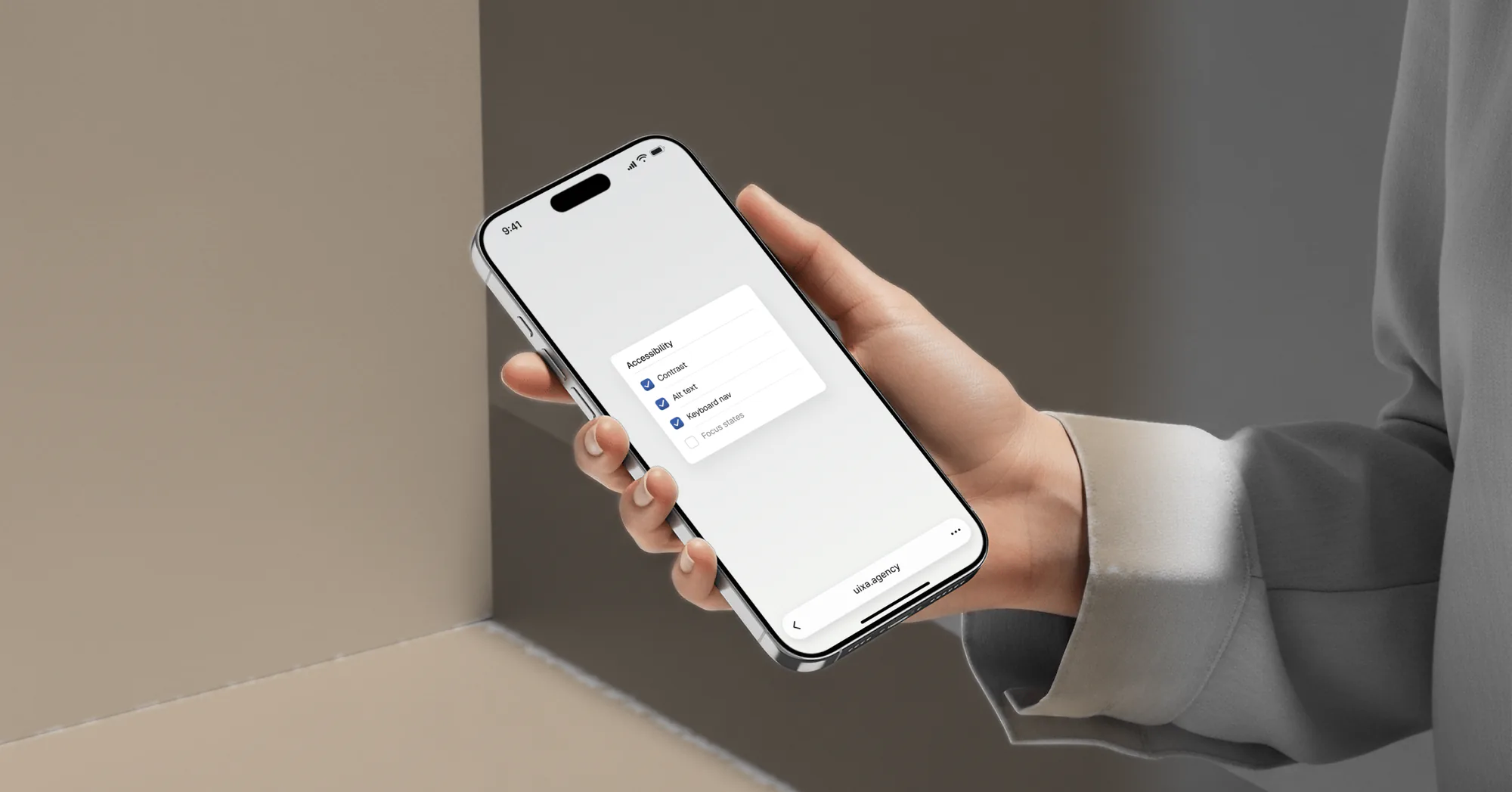
The European Accessibility Act requires many consumer-facing websites and apps in the EU, such as online shops and booking services, to meet accessibility standards. In-scope services, new and existing, have had to comply since 28 June 2025. Following WCAG AA improves usability, widens reach, and is the technical core of compliance. Accessibility isn't just legal, it's good design that benefits everyone.
Why Accessibility Is Now a Legal Requirement for Many Websites
Digital accessibility is no longer optional in the EU. The European Accessibility Act (EAA) requires a wide range of websites, apps, and digital services to meet accessibility standards, so that people with disabilities can use them on equal terms. If you sell to consumers in the EU, it probably applies to you, even if your business is based elsewhere. Pure information sites and B2B-only offers are generally outside it.
What is the European Accessibility Act?
The European Accessibility Act is an EU directive that sets common accessibility requirements for products and services across all member states. For the digital world, that means websites, mobile apps, and online services must be usable by people with a range of disabilities, following a shared technical standard rather than a patchwork of national rules.
Key deadlines
The dates matter, and they're often misunderstood:
- 28 June 2025: the main date. In-scope products placed on the EU market from now on, and in-scope services for consumers, new or existing, must meet the requirements. Online shops and booking sites have no transition period.
- 28 June 2030: a narrow exception, not a general deadline. Service contracts agreed before June 2025 can run for up to five years, and products already used to deliver a service can stay in use until then. Self-service terminals get longer.
In other words, if your shop or booking site is in scope, it needs to comply now, even if it launched years ago.
Who and what the EAA covers
The Act applies to a defined set of products and services, including:
- Websites and mobile applications of in-scope businesses
- E-commerce platforms and online marketplaces
- Online banking and payment services
- Ticketing, transport booking, and self-service kiosks or ATMs
- E-books and certain digital media services
Crucially, it applies to any business offering these to EU consumers, regardless of where the company is headquartered. Some smaller businesses (microenterprises providing services) may fall outside scope, and a "disproportionate burden" exemption exists on a case-by-case basis, but these shouldn't be assumed without checking.
What you actually need to do: WCAG 2.1 AA
The EAA itself describes what must be accessible rather than prescribing exact code. In practice, compliance is assessed against the European standard EN 301 549, which incorporates the Web Content Accessibility Guidelines (WCAG) 2.1 Level AA. That breaks down into four principles, content must be:
- Perceivable: information and interface elements presented in ways people can perceive (text alternatives for images, captions for media)
- Operable: everything usable via keyboard and assistive technologies, not just a mouse
- Understandable: clear, readable content and predictable behaviour
- Robust: built so a wide range of browsers and assistive tools can interpret it reliably
The standard is moving to WCAG 2.2: the new EN 301 549 V4.1.1 is based on it, so building to 2.2 AA now is the sensible choice.
Why it matters beyond the law
Non-compliance carries real consequences: penalties vary by member state, alongside legal action, reputational damage, and restricted access to the EU market. Enforcement began after the June 2025 deadline and is already active in several countries.
But the upside is the better story. Accessible sites are easier to use for everyone: keyboard-friendly navigation helps power users, captions support learning, and clear layouts improve usability across the board. Accessibility also overlaps with good technical practice and supports your SEO, since clean, well-structured, semantic markup helps both assistive technologies and search engines.
Frequently asked questions
When did the European Accessibility Act take effect?
It has applied since 28 June 2025, to new products and to in-scope services, new and existing. The only later dates are narrow exceptions for older contracts, products already in use, and self-service terminals.
Does the EAA apply to businesses outside the EU?
Yes. Any business offering in-scope products or services to EU consumers must comply, regardless of where it's based.
What standard do I need to meet?
Compliance is assessed against EN 301 549, which incorporates WCAG 2.1 Level AA as the benchmark for digital content.
What are the penalties for non-compliance?
They vary by member state and can include fines, legal action, and restricted market access. Enforcement is already underway across the EU.
How do I check if my website is compliant?
Start with an automated WCAG scan to catch common issues, then add a manual review, since many accessibility problems can only be found through hands-on testing and real user feedback.
The bottom line
The EAA marks a shift toward an inclusive digital world, and compliance is now a legal requirement for in-scope services, not a nice-to-have. Meeting WCAG AA is the technical core of compliance, alongside the required accessibility information. It also widens your reach and simply makes for better design. The smartest approach is to build accessibility in from the start of every project rather than retrofitting it later.
Want your site checked against EAA requirements? Get in touch and we'll review where you stand.