





Development
What is SEO?
And Why It Still Matters in 2026
- Published
- 31 May 2026
- Reading time
- 5 min read
- By
- Mateo Jakelic
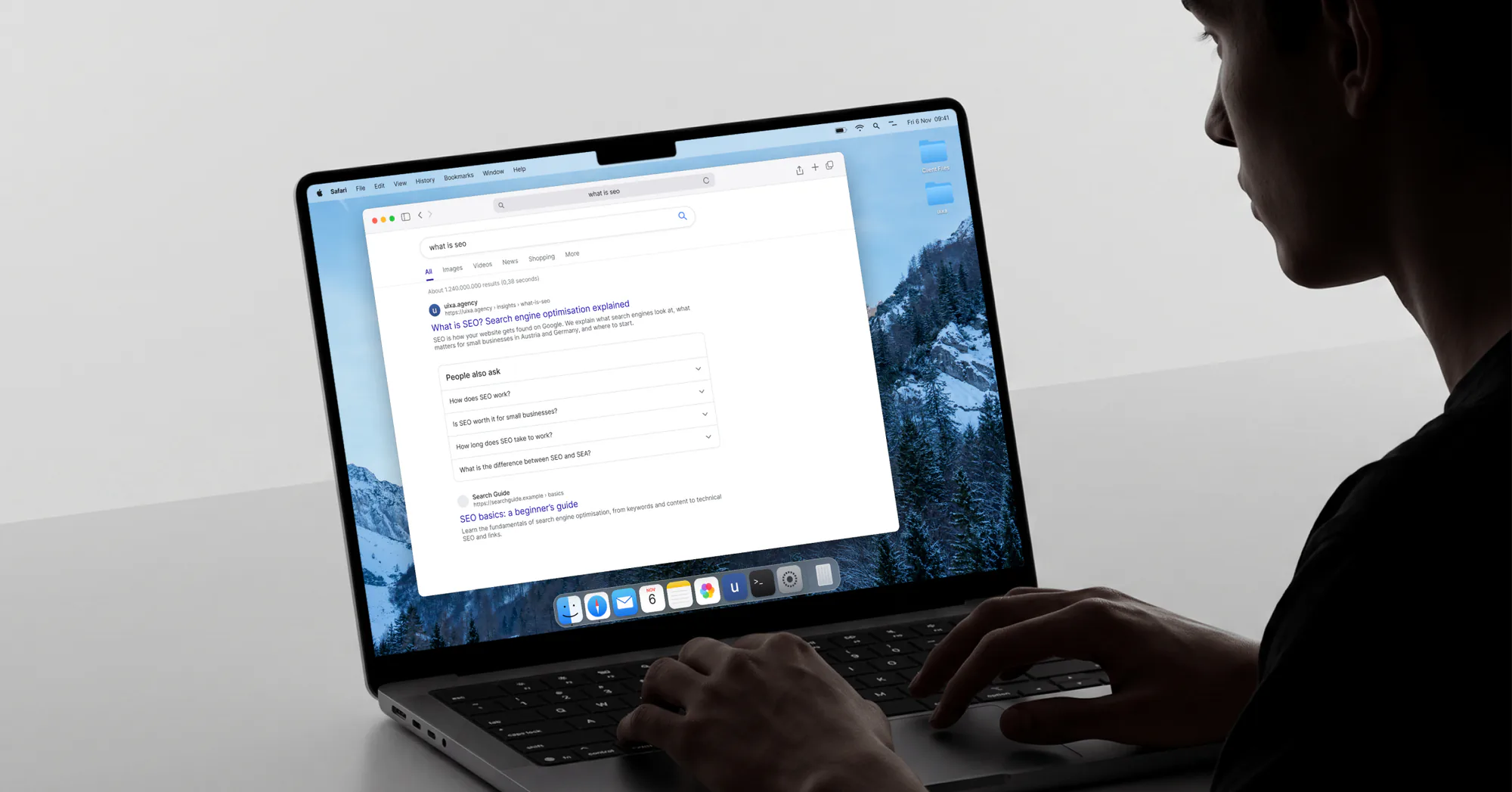
SEO is how your dream customers find you online, without you chasing them. It's a mix of smart content, strong site performance, and knowing what people are really searching for. In 2026, SEO isn't dead. It's just grown up.
Every business with a website has heard the term SEO, and most owners know they need it. But few can say exactly what it is, how it works, or why some businesses land on page one of Google while others stay invisible. Let's break it down clearly, no jargon.
What does SEO mean?
SEO stands for Search Engine Optimisation. It's the practice of improving your website so it appears higher in search results when people search for the things you offer, solve, or care about. Higher rankings mean more visibility, more traffic, and more customers, without paying for ads.
But that definition barely scratches the surface. These days SEO isn't just about keywords and rankings, it's about visibility, credibility, and making sure your ideal customers actually find you. And good SEO doesn't just bring traffic, it brings the right kind: people already looking for what you do.
How does SEO work?
When someone searches for something, Google's algorithm evaluates the relevant pages in its index and ranks them by quality, relevance, and trustworthiness. SEO is the work of making your pages the ones it chooses to show. That work falls into three main areas.
1. Technical SEO
This is the foundation, how your site is built and how easily Google can read it. It includes:
- Clean, fast code
- Mobile-friendly design
- A secure connection (HTTPS)
- Structured data
- Proper indexing and a clear site architecture
Slow pages and broken links cost you visitors and can hold back otherwise good content. Performance and security are part of this foundation, which is why ongoing website maintenance and solid security basics directly support your SEO.
2. On-page SEO
This is everything that lives on your pages:
- Smart use of keywords, without sounding like a robot
- Clear structure: headings, titles, and meta descriptions
- Quality content that actually answers people's questions
- Good user experience that keeps visitors engaged
It's where creativity and optimisation meet.
3. Off-page SEO
This is everything happening outside your website that shapes your reputation:
- Backlinks from other trusted sites, the strongest off-page signal
- Mentions in the media
- Social media (no direct ranking factor at Google, but it can drive awareness and links)
Think of it as street cred for your domain. When authoritative sites link to you, Google treats it as a vote of confidence.
Modern SEO is not keyword stuffing
Google's algorithms are smarter than ever. They now prioritise:
- User intent, what the searcher really wants
- Helpful, relevant content
- Authority and trustworthiness
- Clear site structure and strong performance
So no, you don't need to repeat your service name 27 times. You need content that answers the question behind a search, clearly, confidently, and fast.
SEO and AI search
The biggest shift recently is AI search. Google's AI Overviews on the results page, and AI chatbots elsewhere, now answer many queries directly, pulling from pages they consider authoritative. That doesn't make SEO obsolete, it raises the stakes. Being a trusted, well-structured source is how you get cited by these tools, not just clicked. The underlying rule hasn't changed: genuinely helpful content wins, whether someone finds you through a search result, a social feed, or an AI answer.
Why SEO still matters
Because it's long-term value. SEO isn't a quick hack, it's a strategy. Done right, it builds momentum and keeps bringing in leads, traffic, and trust without constantly pouring money into ads. If you're serious about your digital presence, SEO shouldn't be an afterthought, it should be baked into your site from day one.
One honest note on timing: SEO is a marathon, not a sprint. Most sites take a few months to see meaningful movement, but unlike ads, the results compound rather than stopping the moment you stop paying.
How to check if your SEO is working
You don't need to guess. Google Search Console (free) shows exactly which searches bring you traffic and flags technical issues. For on-page guidance, plugins like RankMath, Yoast, or All in One SEO help as you write, and PageSpeed Insights measures your site speed. Together they tell you what's working and what to fix next.
Frequently asked questions
What does SEO stand for?
SEO stands for Search Engine Optimisation, the practice of improving your website so it ranks higher in search results and attracts visitors who are already looking for what you offer.
How long does SEO take to work?
Usually a few months, depending on your competition and how much work the site needs. It builds gradually, but the results compound over time rather than disappearing when you stop, the way paid ads do.
Is SEO dead in 2026?
No. It has changed, especially with AI search and AI Overviews, but being found when people search matters more than ever. The surfaces are evolving; the need to be the trusted answer is not.
What are the three main types of SEO?
Technical SEO (how your site is built and read), on-page SEO (your content and structure), and off-page SEO (your reputation and backlinks). They work together.
Can I do SEO myself?
The basics, yes, especially with tools like Search Console and a good SEO plugin. For competitive markets or limited time, working with a professional usually gets results faster and avoids costly mistakes.
The bottom line
SEO is how your ideal customers find you online without you chasing them, a mix of smart content, strong site performance, and understanding what people are really searching for. It isn't dead in 2026; it's just grown up. Build it into your site from the start and it pays you back for years.
Want to know where your site stands? Get in touch and we'll take a look.